The strategic position of Khuzestan province in the pasta export chain
Access to the combined transport network
One of the prerequisites for success in exporting Iranian pasta from Khuzestan to the Eurasian Union is the speed and low cost of transportation. Khuzestan provides the possibility of sending cargoes in a combined manner (rail, road and sea) due to the benefit of national railways and active ports. This feature allows the pasta shipments to be transported to the northern ports or the borders of Astara and Sarkhes in the shortest possible time while maintaining the original quality, and from there to the member countries of the Eurasian Union.
Proximity to suppliers of raw materials and quality wheat
Khuzestan is one of the major producers of high quality wheat in Iran. Access to high-quality semolina flour, which is the main raw material in the production of high-quality pasta, greatly reduces production logistics costs. Advanced factories such as Dadanam Food Industries have optimized the production to export process by taking advantage of this geographical capacity.
Eurasian Economic Union; A pristine and demanding market for Iranian pasta
The Eurasian Economic Union (EAEU) includes the countries of Russia, Kazakhstan, Belarus, Kyrgyzstan and Armenia, a market with a population of more than 180 million people. Free trade agreements between Iran and this union have created an exceptional opportunity for Iranian exporters.
Tariff discounts and customs facilities
One of the biggest advantages of trade with Eurasia is the significant reduction of customs tariffs for Iranian food products. Iranian pasta has the ability to compete with the products of Türkiye and European countries in the market of Russia and Kazakhstan due to the reasonable price and high quality. The easing of customs laws has made the process of Iranian pasta exports from Khuzestan to the Eurasian Union to accelerate.
Changing consumption patterns in Eurasian countries
The demand for prepared and semi-prepared food products such as macaroni and pasta is increasing in Eurasian member countries, especially in the big cities of Russia and Kazakhstan. Consumers in these countries are looking for products that, in addition to quick cooking, have high nutritional value and reasonable prices. The pasta produced in Iran covers these needs well.
The role of technology and standards in the acceptance of Iranian pasta in the Eurasian market
The market of member countries of Eurasia has its own quality standards. In order to successfully enter these markets, it is necessary to comply with international and health standards.
Health standards and international certificates
Eurasian countries are very sensitive about health certificates, accurate laboratory analyzes and resistant packaging. Exported pasta and pasta must be free of any unauthorized additives and its protein and gluten percentage must be within the standard range. By equipping their quality control laboratories with the latest technologies in the world, reputable brands such as Dadanam Food Industries have been able to obtain all the necessary permits to enter this strict union.
The role of advanced packaging in maintaining product shelf life
The length of the transit routes to northern Eurasian countries such as Belarus and Russia requires that the packaging of pasta has sufficient strength against moisture and pressure. Modern designs and the use of multi-layer cellophanes in product packaging guarantee the preservation of product quality until reaching the end consumer.
Dadnam food industry; A pioneer in the export of high-quality food
Among the companies active in the country's food industry, Dadanam Food Industry is known as a brilliant and reliable name. Focusing on the production of high-quality products in accordance with global standards, this collection has taken great steps towards the development of Iran's export market.
Using modern and fully automatic production lines
Using advanced European machinery and manual processes, Dadnam produces pasta with uniform texture, optimal cooking time and high nutritional value. This has caused the products of this company to enjoy high popularity among Eurasian businessmen compared to regional competitors.
A unique variety of export products
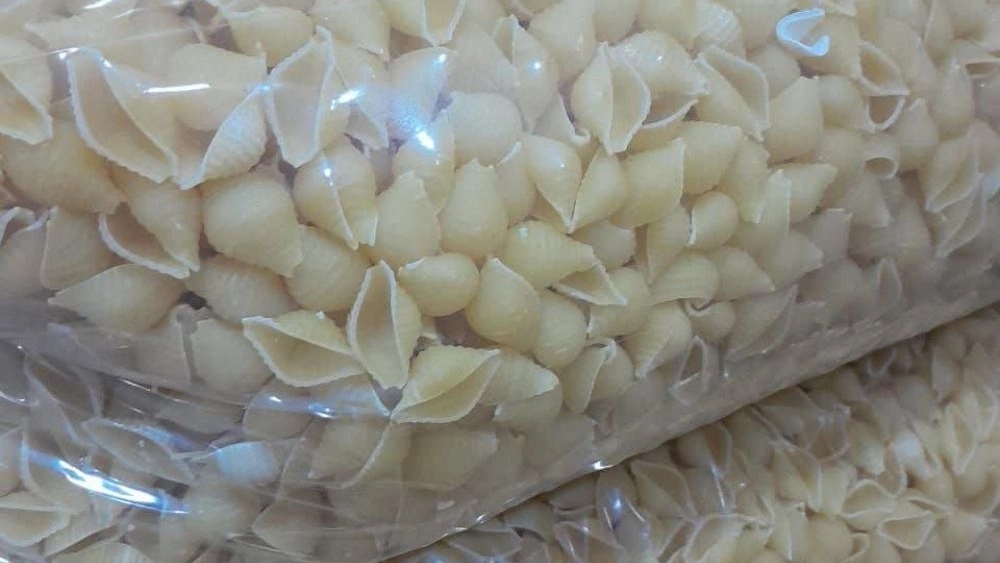
One of the strengths of Dadanam food industry is the diversity of its products. The production of different types of spaghetti in different diameters, various forms of pasta and lasagna with special formulations, meets the different tastes of consumers in Russia, Kazakhstan and Armenia. This variety of products leaves the traders' hands open for more maneuver in the target markets.
Transit challenges and solutions to facilitate exports from Khuzestan
Despite countless opportunities, the path of Iranian pasta exports from Khuzestan to the Eurasian Union faces challenges that knowing and solving them will help to further develop this business.
Time management in transportation and crossing borders
The length of the route and delays at some customs borders in the cold seasons of the year can threaten the quality of the cargo. To solve this problem, the use of standard refrigerated containers and online cargo tracking systems are recommended. Large export companies have been able to minimize the time of stopping at the borders with strict logistics coordination.
Banking and currency transfer issues
One of the constant obstacles of Iranian exporters is international financial restrictions. However, with Iran's membership in regional treaties and the use of bilateral payment mechanisms in national currencies (such as Rial and Ruble), suitable solutions have been created for the settlement of trade accounts between Iranian merchants and Eurasian buyers.
The future prospects of Iran's pasta exports to Eurasian countries
According to the signing of the permanent free trade agreement between Iran and the Eurasian Union, it is expected that the volume of trade exchanges will grow significantly in the coming years.
Khuzestan will play a key role in guiding this export by upgrading its port and railway infrastructure. The country's food industries, and especially groups such as Dadnam Food Industries, can multiply Iran's market share in this area by planning to increase production capacity and focus on digital marketing and participation in international exhibitions in Moscow and Astana. Investing in research and development to adapt the taste and packaging to the native tastes of the Eurasian people will be the key to sustainable success in this dynamic market.