
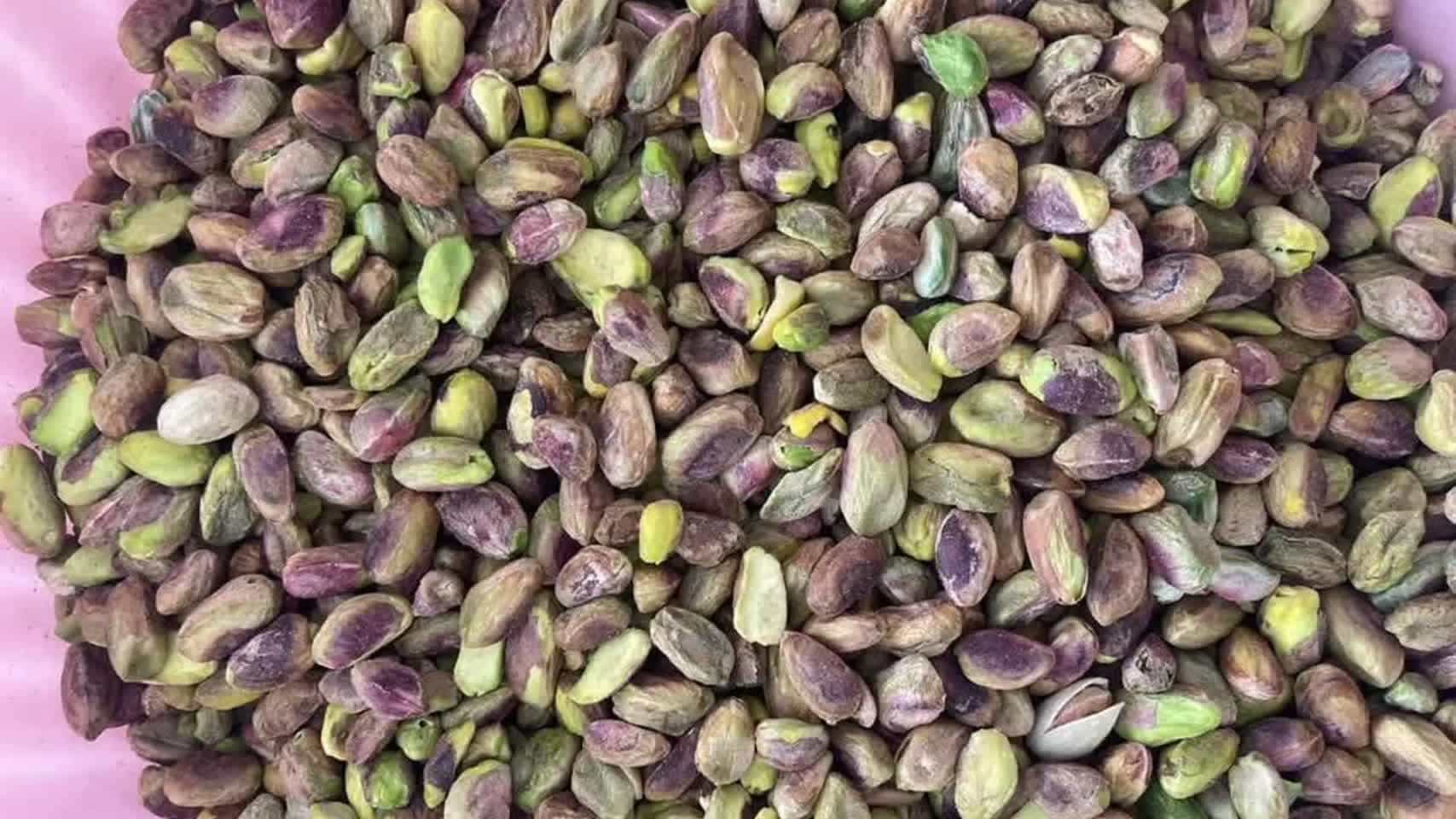
Iranian pistachio exports is one of the important areas of Iran's agricultural and food trade, and the European market can be an attractive destination for the supply of this high-quality product. Iranian pistachio is known in international markets due to variety of cultivars, good taste, high nutritional value and long history in production and processing. However, a successful entry into European grocery stores is not only limited to having a high-quality product; But issues such as quality control, packaging, food safety requirements, product tracking, labeling and recognizing the needs of the European consumer are also very important.
In the meantime, Iranian pistachio exports for European grocery stores can be a significant business route for producers, exporters and groups active in the food industry. Chain stores, supermarkets, health-oriented product stores, Middle Eastern food stores, and even some specialized dry fruit businesses can be potential customers of Iranian pistachios.
Dudanam Food Industries can also introduce itself as an option to cooperate with buyers and grocery stores by focusing on the supply, processing, preparation and supply of food products and dry fruits. The aim of this approach is to create a more direct connection between Iran's pistachio production capacity and the needs of foreign markets.
Why is it important to export Iranian pistachios to Europe?
Europe is one of the most important markets for the consumption of food products and dried fruits in the world. In addition to taste and quality, European consumers pay attention to factors such as product origin, health, packaging, nutritional information and supply chain transparency.
In such a situation, Iranian pistachio exports can be successful when the product, from the production stage to packaging and shipping, is aligned with the expected standards of the target market.
Pistachios can be supplied to the European market in different formats; Including:
- Raw pistachios with skin
- Pistachios with kernels
- Salted and roasted pistachios
- Pistachios without skin
- Pistachios for the food industry
- Packaged pistachios for retail stores
- Pistachios in bulk packages for distribution companies
- Pistachios used in confectionery and chocolate industry
This diversity makes Iranian pistachio exports not limited to only one customer model and it is possible to design different products for different sales channels.
quality; The most important factor in the export of Iranian pistachios
In the European market, product quality must be measurable and provable. A wholesale buyer or grocery store usually does not make a decision based on the appearance of the product alone. Factors such as product health, uniformity, moisture content, storage conditions, packaging, product specifications and related test results can play a role in the purchase decision.
One of the most important issues in Iranian pistachio exports is the control of aflatoxin. The European Union has set requirements and limits for food contaminants, including mycotoxins and aflatoxins. The European Commission also follows specific regulations and controls for imported food and the risk of aflatoxin in some food products.
For this reason, an exporter who intends to export Iranian pistachios to Europe should consider quality control as a part of the main export process, not a step that should be done only at the time of shipment.
Appropriate control may include checking the following:
- Appearance quality of pistachios
- Brain and skin health
- Product moisture
- Processing hygiene conditions
- Possible contamination
- Aflatoxin
- Residual toxins if required by the destination market
- Packaging conditions
- Product traceability
- Transport and storage conditions
Iranian pistachio packaging for European stores
One of the important differences between wholesale and store sales is the type of packaging. In bulk export, the buyer may receive the pistachio in large packages and then pack and supply it himself; But for direct sales in the store, the appearance of the packaging, information on the product and ease of use become more important.
Appropriate packaging for Iranian pistachio exports should be chosen according to the sales channel. For example, a chain store may be interested in small packages for home consumption, while a confectionery or chocolate company buys pistachios in industrial, higher-volume packaging.
In packaging design, things like net weight, product name, expiration date, storage conditions, nutritional information and information required by the destination market should be considered.
The European Union has specific requirements for consumer food information. The EU Food Information Regulation specifies items such as product name, list of ingredients, allergens, net amount, best before date, storage conditions and nutritional information for many packaged foods.
Since pistachio is in the group of nuts and nuts, the issue of allergen declaration is also of particular importance. European Union regulations include pistachios in the list of notifiable allergens, and information about allergens must be provided in a recognizable form on the label.
labeling; An important part of Iranian pistachio exports
One of the common mistakes in international trade is to think that product quality alone is enough to enter the market. In practice, Iranian pistachio exports to Europe need to pay attention to the rules of the destination market.
The product label must be understandable and legible for the consumer. According to the requirements of the European Union, mandatory food information must be presented in a language understandable to consumers in the Member State of supply, and the information on the package must be clearly and legibly included.
Therefore, if the goal is to sell Iranian pistachios in different European countries, it may be necessary to design the labeling version according to the market of the destination country.
In this context, Iranian pistachio exports for European stores should be done with a "market-oriented" approach; That is, before the production of the final package, the destination country, type of customer, sales channel and legal requirements of that market should be determined.
Product tracking in the export chain
Tracking is another important issue in the food supply chain. The European buyer should be able to check the information related to the supply route of the product if needed.
The European Union considers traceability as one of the pillars of food safety and emphasizes the ability to follow the movement of products and raw materials at different stages of the supply chain.
For Iranian pistachio exports, creating a proper tracking system can include recording information about the supplier, production or processing date, batch or lot number, quality control results, packaging and shipment destination.
In addition to helping meet the requirements, this issue can also increase the confidence of the buyer.
Selling Iranian pistachios in European grocery stores
To be successful in Iranian pistachio exports, the difference between the main customer and the final consumer should be considered.
European grocery stores are usually looking for a product that, in addition to quality, allows for regular and predictable supply. Therefore, a professional exporter should be able to provide clear information about supply capacity, product specifications, packaging type, preparation time and delivery conditions.
For example, a store may be looking for 100, 200 or 500g pistachios, while a major distributor may request multi-kilo packages.
For this reason, Iranian pistachio exports should be designed based on customer needs and not just based on the product that the exporter has.
What is the advantage of Iranian pistachios in the European market?
Iranian pistachios have a long history in production and trade, and this history can be one of the strengths of marketing. The variety of pistachio cultivars, taste characteristics, application in confectionery and chocolate industries and the possibility of supply in different forms create a suitable capacity for market development.
In fact, success in Iranian pistachio exports happens when "good product" becomes "standard and reliable export product".
The role of Dadnam food industry in export development
Dadanam Food Industries can strengthen its position in the export chain by focusing on foreign markets, providing food products and providing products that meet the needs of international customers.
For an active group in the field of food industry, a successful presence in the European market is not limited to the sale of one shipment; Rather, it is important to establish a long-term business relationship. The European customer is looking for a supplier who can keep the quality and specifications of the product as consistent as possible in different orders.
From this point of view, Dadanam Food Industries can play a role in introducing the capacities of Iranian pistachios, providing products tailored to the needs of buyers and developing cooperation with stores, distributors and European food industry activists.
The advantage of a professional cooperation is that instead of buying an unknown product without sufficient information, the customer will face a supplier who takes the supply process, product specifications and the needs of the destination market seriously.
Which countries can be the target market for Iranian pistachios?
Choosing the destination country should be done based on market research, import laws, purchasing power, distribution structure and type of demand. European markets are not the same and consumer preferences can vary from country to country.
For Iranian pistachio exports, markets such as Western European countries, Central Europe and some Northern European countries can be examined separately. The following should be evaluated in each market:
- Amount of dried fruit consumption
- Presence of specialized food stores
- Market size of health-oriented products
- Competition with pistachios from other countries
- Shipping cost
- Import requirements
- Labeling rules
- Consumer taste
- Common package size
- Acceptable final price
This analysis helps to transform Iranian pistachio exports from a general activity into a targeted export program.
Pricing in Iranian pistachio exports
Price is one of the most sensitive factors in export negotiations. The final price of Iranian pistachios depends on several factors; Including variety, quality, size, type of processing, raw or salty, type of packaging, order volume, delivery conditions and shipping cost.
It is wrong to determine the export price only based on the domestic price. In Iranian pistachio exports, all costs of the export chain should be considered.
Costs such as packaging, quality control, domestic shipping, documentation, international shipping, insurance, and destination-related fees can affect the final price.
For Dadanam food industries, presenting a business proposal according to the volume of the order and the type of packaging can help to create flexibility in negotiations with foreign customers.
Aflatoxin control in Iranian pistachio exports
The issue of aflatoxin is one of the most sensitive parts of Iranian pistachio exports to the European market. The European Union has specific regulations for contaminants in food, and aflatoxins are also considered in this framework.
For this reason, product control before shipping can play an important role in reducing business risk. According to the current regulations and conditions of the destination country, the exporter must check the laboratory requirements and required documents from specialized authorities and the buyer.
This increases the importance of working with a supplier who takes the quality control process seriously.
In Iranian pistachio exports, preventing the problem is much better than trying to solve the problem after the shipment reaches its destination.
Transportation and storage of exported pistachios
Pistachios are a sensitive food product and the conditions of transportation and storage can affect its quality. The packaging should be chosen according to the conditions of transportation and the product should be kept in proper conditions.
In Iranian pistachio exports, logistics planning should start from the moment the order is received. Choosing the type of packaging, the volume of the cargo, the shipping method, the shipping time and the conditions of the destination must be in harmony with each other.
Also, it is necessary to clearly provide the product specifications and storage conditions to the buyer.
How to find a European customer for Iranian pistachios?
One of the most important steps in the development of Iranian pistachio exports is identifying the right customer. Simply sending a generic catalog is usually not enough for a large number of companies.
Potential customers can include:
- chain stores
- dry fruit importers
- food wholesalers
- distribution companies
- organic and health-oriented product stores
- chocolate manufacturers
- confectionery and dessert companies
- restaurants and hotels
- Iranian food stores and Middle Eastern
A different proposal should be designed for each group.
For example, a retail store pays attention to beautiful packaging, product information, and consumer-friendly weights; While a confectionery factory cares more about price, uniformity of quality, volume of supply and technical specifications.
Why is it important to choose the right supplier?
The European buyer is usually looking for a stable business relationship. If the quality of one shipment differs greatly from the next order, customer trust will decrease.
Therefore, Iranian pistachio exports should be done with the aim of establishing long-term cooperation.
Dadanam Food Industries can focus on factors such as product quality, appropriate packaging, commercial responsiveness and understanding customer needs in introducing the capacity to supply and provide suitable food products for foreign markets.
To be successful in the European market, it is better to define each order with detailed product specifications, packaging conditions, quantity, delivery time and mutually agreed upon requirements.
summary; The future of Iranian pistachio exports to Europe
Iranian pistachio exports to European grocery stores can be a valuable business opportunity; But success in this direction requires more than a high-quality product. Safety control, attention to aflatoxin, proper packaging, correct labeling, tracking, quality stability and customer recognition are key factors in this market.
The European Union has specific requirements for food import, consumer safety and food information, and importers must ensure that imported products comply with the relevant requirements.
On the other hand, the European consumer cares about accurate and transparent information about the product. Therefore, correct labeling and providing reliable information can help increase market confidence.
In this way, Dadanam Food Industries can pursue cooperation with European importers, distributors and food stores by focusing on the capacities of the food industry and the supply of Iranian pistachios for foreign markets.
If the goal is to seriously enter the European market, the best approach is to see Iranian pistachio exports as a long-term project; A project that starts from product selection and quality control and continues to packaging, documentation, transportation, marketing and after-sales service.
Finally, the combination of Iranian pistachio quality + standardization + professional packaging + knowledge of the European market + continuous supply can be the right path for sales development. Dadanam Food Industries by introducing its capacities to foreign buyers and focusing on the real needs of the market, can in this way seek to establish sustainable business cooperation and develop the Iranian pistachio market in Europe.